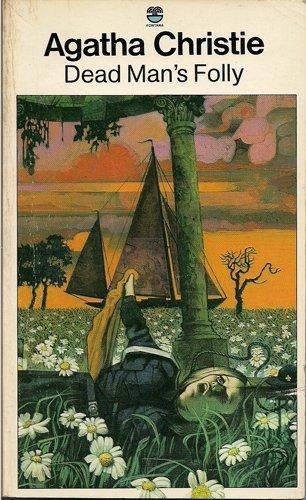
Month two of my one-Christie-a-month project, and Dead Man’s Folly turned out to be a much more interesting read than I expected going in. I had it in my head that Christie novels always live in a compressed timeline — everything happening over one tense day or two — but this one broke that assumption in a way that ended up being one of the most interesting things about it. Between the structural surprises, a couple of genuinely sweet character moments, and one significant piece of outdated content I can’t gloss over, this is a review with a lot more nuance than my usual “loved it, here’s why” post.
Read more: Dead Man’s Folly review: A Twisty Mystery That Didn’t Quite Age WellPacing & Narrative Structure
This one opens dense and detailed with the setup and murder, then starts skipping forward in multi-week jumps, only briefly mentioning things that are clearly important to the plot. It didn’t feel rushed or lazy — it read like a conscious choice, more like how a real investigation actually crawls rather than the tidy compressed timelines Christie’s known for. Makes sense when you consider she’d been writing for decades by 1956, so it tracks that her structure would be more willing to stretch than in her earlier books. There’s also a good stretch where Inspector Bland handles all the alibi and movement legwork with barely a Poirot cameo in sight — I only really noticed how long he’d been absent when it suddenly cut back to him.
Character Moments & What Worked
And when it did cut back, the scene was genuinely sweet: Poirot remembering Bland from his younger days. That’s Christie doing what she does best — those small character beats, like the aside about Poirot and the jigsaw puzzle, which had me laughing out loud. She really knows how to write characters, and this book is full of little proof-points of that.
A Necessary Content Warning
Now the part that didn’t age well: Hattie, Lady Stubbs, gets repeatedly referred to as “mentally deficient” and “subnormal” throughout, and there’s a eugenicist character who gets a half-rant about “people like her” needing to be killed. Definitely of its time, and there’s an argument it’s partly intentional social commentary — similar to how Christie gently pokes fun at the villagers all insisting the murderer must be “one of those foreigners.” But intentional or not, the constant belittlement of Hattie still isn’t great to read. The ending does recontextualize it somewhat — it turns out to be a twist Christie’s used a few times across her catalogue, and I don’t think reusing a twist makes it a bad one. But the wording used to get there is still appalling, and that’s the main thing knocking this down from what would otherwise be a 4-star read.
Final Thoughts:
3.5 stars from me. Recommended if you’re working through the Christie catalogue like I am, or if you enjoy the classic English-village-murder setup with some genuinely clever structural choices — just go in aware of the outdated language around disability.
Read my full Goodreads review here!


Leave a Reply