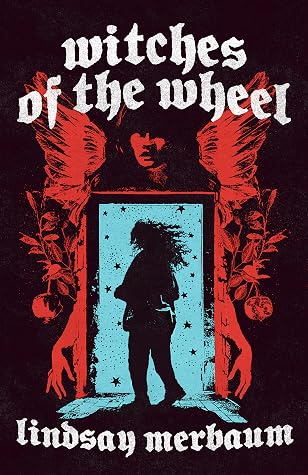
I went into Witches of the Wheel expecting an adventure and got something much quieter and more interesting instead — my bad for assuming, honestly, the blurb never actually promised that. What I got was a self-discovery story wrapped in some of the best obscure mythology worldbuilding I’ve read in a while, narrated by someone whose upbringing is rough enough that it could’ve tipped into misery-lit, but never does. It’s the kind of book that rewards close attention, and occasionally punishes you a little for not paying enough of it.
Read more: Witches of the Wheel (ARC review)The Lore Is the Whole Point
This book leans hard into non-Greco-Roman mythology — Inanna, Hathor, some Norse touches, a Babylonian backbone in a city that’s actually confirmed as Midwestern America rather than the Babylon, though the allusion is clearly intentional and never quite pays off. The goddesses are written as actual goddesses, not softened into pretty inspirational figures, and the lore gets drip-fed as our narrator Gold discovers it herself rather than dumped on you all at once. As a bit of a mythology nerd, getting the Inanna payoff after already knowing who she was going in felt genuinely satisfying — she’s obscure enough that the reveal actually does work.
Where It Got Confusing
Here’s my real critique: I got mixed up more than once. Gold’s mother (Barb) and the Wheel’s head bartender (Brenda) are two very different characters who share a similar enough name that I kept conflating them. Later, it’s often unclear whether someone is an actual goddess or just a person who happens to share a goddess’s name — and in a world where actual goddesses and consorts are walking around, I wanted that distinction sharper. There’s also a persistently weird focus on breasts throughout that never resolves into meaning anything, and the ending felt rushed — almost like a different book — tying everything up in a bow when I would’ve preferred something more open.
Heads up too: there are several graphic, sex-adjacent scenes near the end. Not sexy, just very in-your-face — worth knowing if that’s not your thing.
Final Thoughts
3.5 stars. Genuinely torn on this one — the lore and worldbuilding are excellent, but you really have to pay attention, and the naming confusion tripped me up more than once. Rylie Jackson’s narration is a clean, understated read that suits the book well. Recommend for urban fantasy fans who like their mythology obscure and don’t mind a slow, interior build.
Read my full Goodreads post here!


Leave a Reply