
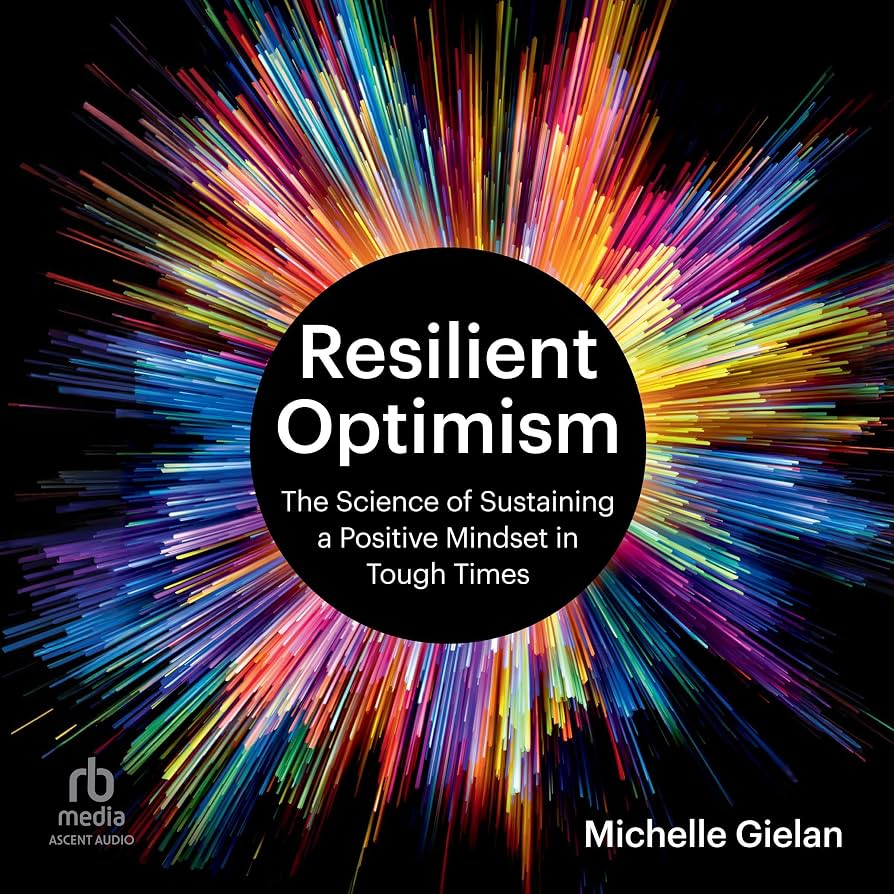
Resilient Optimism by Michelle Gielan isn’t my usual fare, but I picked it up for a reason, and it delivered on that front. What hooked me was the structure — every chapter opens with a real vignette showing the method in action before the science backs it up, priming you to see how it applies to your own life rather than just reading theory at you. The gratitude practice stuck with me most, and I’m already planning to build it into my own routine.
Read more: Resilient Optimism (ARC review)What Worked
The tips and case studies are the real strength here — practical, grounded, easy to actually picture yourself using. The gratitude method in particular is something as small as writing down two or three good moments a day, simple enough that I actually want to start doing it. I’ve got a friend I’m planning to set up a daily “good moments” Discord channel with, directly inspired by this book. And Gielan narrates the audiobook herself — one of the better examples of author-as-narrator I’ve heard, since she’s clearly at home speaking to an audience and that comfort comes through in a reading with real personality.
The Caveats
One thing worth naming, and it’s more about stress-resilience research in general than this book specifically: it’s not clear these studies include people with chronic illnesses like ME/CFS, and a chronically activated nervous system runs on different baseline mechanics than what these studies are usually measuring. I genuinely don’t know if the findings apply to a body like mine — but I still wanted to try the techniques on their own merits, evidence gap aside. There’s also a moment of unintentional ableism worth flagging: an exercise that asks you to reflect on how a stressful experience “shaped you” lands very differently when what it shaped was a chronic illness. A later version handles it more carefully, acknowledging the pain before reframing it, but underneath it’s still doing a “gain through pain” thing — hit or miss.
Also, heads up if you have pregnancy/birth/medical triggers, since there’s content there I wasn’t expecting going in.
Final Thoughts
Four stars.
Recommended if you want a practical, well-delivered entry point into resilience science — just know the research is skewed toward a healthy, nondisabled population, so your mileage may vary depending on what body you’re bringing to it.
Read my full Goodreads review here!


Leave a Reply