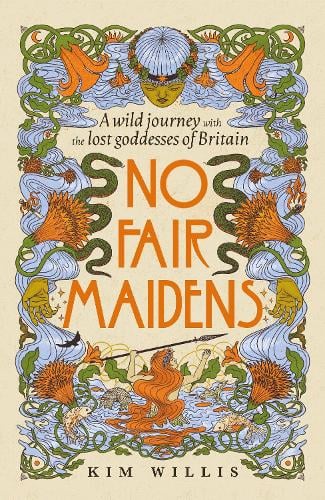
I went into No Fair Maidens by Kim Willis expecting one book and got a completely different one — and honestly, the opening chapter alone nearly convinced me that was fine. It’s the kind of writing that puts you right there on the ship, staring at the women on the shore, waiting to hear their stories. I teared up with enthusiasm within the first few pages and immediately grabbed the audiobook, half-expecting some kind of atmospheric soundscaping to match. It’s not soundscaped. By a few chapters in, I understood why — but that’s getting ahead of myself.
Read more: No Fair Maidens review: strong opening, weak deliveryNot the Book the Synopsis Sold Me
This isn’t the goddess-mythology deep dive the synopsis implies — there’s no real digging into the history of these goddesses or their sources. Instead, Willis weaves her own story, mental health struggles and a false infertility scare included, through the mythology, using these goddesses as a lens for a very personal, present-day journey rather than a historical one. It’s an interesting choice and I’m still not sure it fully lands, but I respect that it swerved my expectations. The ambition doesn’t stop there, either — she’s also examining how women’s stories and power were systemically suppressed across the Tudor era, colonisation, and empire, which is a lot to carry alongside the memoir thread.
Pacing and the Audiobook Save
That ambition shows up in the pacing: meandering, essay-like, more interested in accumulating ideas than driving forward. This is where the audio format actually saved the experience for me. I don’t think I’d have stuck with it on the page, but audio let me tune out during the slower stretches and tune back in when it picked up.
Where It Lost Me
For a book all about women reclaiming their power, it’s a very narrow, privileged version of power on offer — talking to goddesses, exclusive women’s retreats, an insistence on total creative freedom — with zero acknowledgment that age, race, disability, or class can put that same “reclamation” out of reach entirely. That’s a rough blind spot from someone who spends a whole chapter on her own pain at not fitting the “traditional mother” mould. And more broadly: I’m tired of “reclaiming your sexuality” being shorthand for “have all the straight sex you want, guilt-free.” As an asexual woman, my sexuality is “no thank you,” and that’s not repression waiting to be liberated — it’s just who I am. This book, like a lot of others, only sees its own experience as the template.
Bottom Line
There are good bits here — that opening chapter alone is worth something — but between the privilege-blind framing and the sexuality reductiveness, it aggravated me more than it moved me. I DNF’d at 71% and landed on 3 stars: this one needs the right reader, and it’s clearly not me.


Leave a Reply