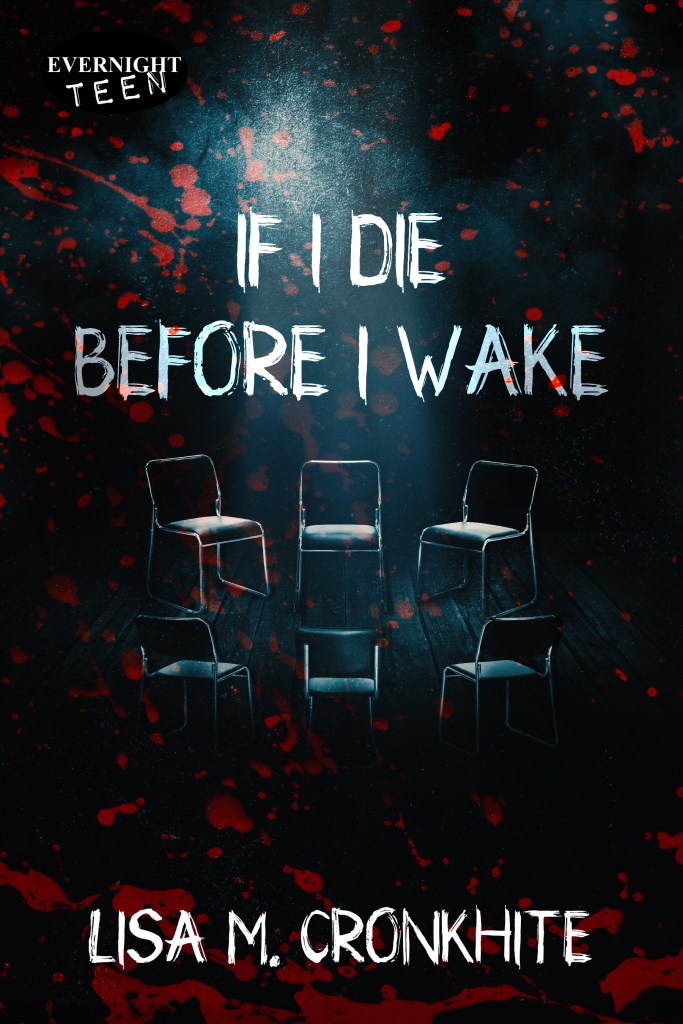
If I Die Before I Wake by Lisa M. Cronkhite is a YA horror novel told through rotating first-person chapters, following a group of teens connected by a shared dream group and the doctor who runs it — dreams that evolve rather than repeat, and that increasingly seem to be predicting the future. There’s real potential here: strong character voice work, a genuinely compelling central hook, and moments of real emotional insight. But the pacing struggles to keep up with its own ideas, leaving a story that feels back-loaded in a way that undercuts some of its best material. Landed at 3.5 stars for me, and here’s the breakdown of why.
Read more: If I Die Before I Wake review: good bones, rough pacingVoices & Characters
The rotating first-person structure is a bold choice, and it mostly pays off. Each character’s voice is distinct enough that even when names took me a minute to place, it was easy to tell who was narrating from the voice alone, and that’s a real craft win. The short chapters help too, keeping the shifting perspectives easy to track rather than disorienting. That said, the ensemble isn’t evenly developed — most of the group becomes tightly interwoven with each other’s lives as the book progresses, but one character, Kim, stays largely isolated from that web for much of the book, only intersecting with the others during their shared dream sessions. Cutting back to her plot feels jarring precisely because she hasn’t been woven in the way the others have. To the book’s credit, this pays off: Kim’s family insists she has schizophrenia, and as the line between her dreams and reality blurs, she becomes a genuinely effective unreliable narrator. That confusion works for the story, in contrast to some of the book’s other clarity gaps.
On the darker side, several of the male characters are written as entitled and, frankly, terrible toward the women and girls around them. It’s true to real-world dynamics, but reading it in unfiltered first person — particularly one character’s chapters, which are essentially a stalking narrative — makes for genuinely uncomfortable reading. That discomfort seems intentional, and it works: his eventual death lands as relief for me rather than tragedy. Readers who prefer their horror with a little more distance from real-world misogyny should know this one stays close to the bone.
Mental Health Representation
The author’s own lived experience clearly informs parts of this book, and in places that authenticity really shines through. Unfortunately, it’s uneven. One character’s arc leans heavily into what reads as bulimia, and that thread gets sustained attention throughout. His OCD, however, is a different story — it’s mentioned dismissively by another character early on (“has OCD or something”) and then essentially dropped until his single POV chapter near the end, where a specific ritual (doing things in threes) appears for the first time. For representation meant to center obsession and compulsion, introducing it that late undercuts it. Every other character got a book’s worth of interiority; this one got a single chapter to retroactively establish his.
Also worth flagging: this book carries a lot of trigger warnings, so go in aware of that.
Pacing
This is where the book struggles most. The tension builds slowly, and it isn’t until roughly 70% of the way through that the story finds real urgency. The dream-group takes far too long to question their doctor, and a secondary character, Maggie, is introduced without explanation and never developed. Then the pacing problem flips entirely in the back stretch — a major reveal at the heart of the mystery is delivered in only a couple of pages after all that slow build, and the final 20% crams in an overwhelming amount of action plus a last-minute twist that doesn’t get the room it needs to land. The book essentially trades a slow first two-thirds for an overstuffed final act, when a more even distribution would have let both halves breathe.
Close
The bones of this story are genuinely good — several strong ideas that could each have carried their own book, distinct character voices, a compelling evolving-dream hook, and real flashes of insight and authenticity around mental health. It just needs some pacing work to let all of that land the way it deserves.
3.5 stars, recommended for readers who like their YA horror grounded in real-world darkness rather than genre distance.
Many thanks to the author, Lisa M. Cronkhite, for providing me with a copy of this book in exchange for an honest review.
Read my Goodreads review here!


Leave a Reply