
Thank you to Crooked Lane Books and NetGalley for the advance copy (ebook) in exchange for an honest review.
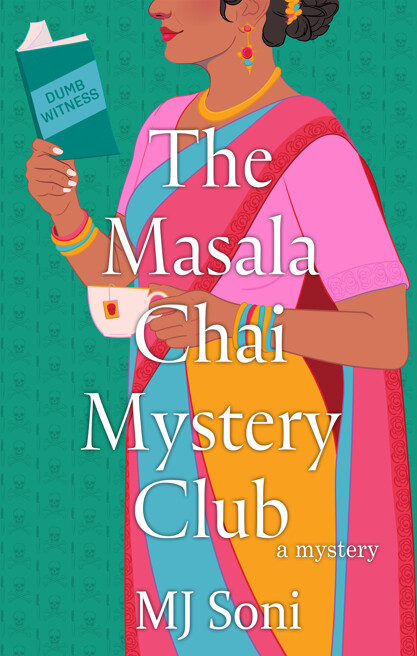
Retired librarian Neeti Shah’s neighbor Rohit, a much-disliked childhood friend, is found dead with a copy of Christie’s Dumb Witness nearby. Feeling indebted to him, Neeti recruits her chai-loving, mystery-loving friends into the Masala Chai Mystery Club to find the killer as more bodies and suspects turn up.
Read more: The Masala Chai Mystery Club (ARC review)Content notes: a child goes missing (with real fear of kidnapping or murder), household conflict affecting a young child, and a possible stalker storyline.
Summary & Premise
Bottom line: this is trying to be The Thursday Murder Club, not Agatha Christie, despite all the Christie nods. Once I read it that way, focusing more on the characters than the puzzle, I enjoyed it far more. It also opens beautifully: a preface chapter called “The Dumb Witness,” where the dog is the dumb witness and a man chats away to his dog. Adorable, and I was in love by page one.
Atmosphere & Characters
I applaud the diversity of the cast, especially compared to Thursday Murder Club. The characters are bright, bold and a bit over the top, but I wasn’t mad about it. They’re also very surface-level. Neeti has about two notes, and some of the representation feels hollow. A South African character’s distrust of the police after apartheid is understandable, but it felt exaggerated, as if the history stood in for a personality. Hers is also the only accent spelled out phonetically, which came off as icky. Speech patterns and word choice are enough. The author explains that she grew up in South Africa, so this is a craft critique, not an objection to whose story it is.
Subplots/Themes
The household drama is where it lost me. A child going missing is short but intense, and the follow-through isn’t cozy: the 5-year-old was trying to run away because of the tension at home, because people won’t talk to each other like adults, which is a pet peeve of mine. Add a stalker storyline and it’s more tension than a cozy needs, especially with a young child caught in the middle.
On disability: Lawrence is written as capable, intelligent and exactly who he was, with a trembling hand and a slower pace. That’s more accurate than several books I’ve read this month. But there are careless details around him. His pace is framed as holding everyone back, a non-disabled character parks in a disabled space because she’s in a hurry with no comment, and four electric wheelchairs are compared to mosquitos. The author says her mother had vascular dementia, so wanting to include a progressive illness makes sense. It’s well-meaning but not fully thought through.
Pacing & Technical Notes
It felt uneven early on, though the mystery picked up and pulled me back in. The recurring issue is not trusting the reader: cultural details are explained when they could simply exist (everyone being “auntie” or “uncle,” how the chai is poured), literary references are explained (if you have to explain a raisin joke, maybe don’t make it), and characters keep pausing to compliment themselves on the club’s name.
Final Verdict
A charming, diverse, comfort-read ensemble with warmth to spare, and recipes in the back, including masala chai, which I loved. It’s probably a 4-star read, but my own disability lens made a lot of it frustrating. Best for readers who want a Thursday Murder Club-style ride. A heads-up: the child-in-jeopardy and family-conflict threads are heavier than the cover promises. 3.5 stars from me!


Leave a Reply