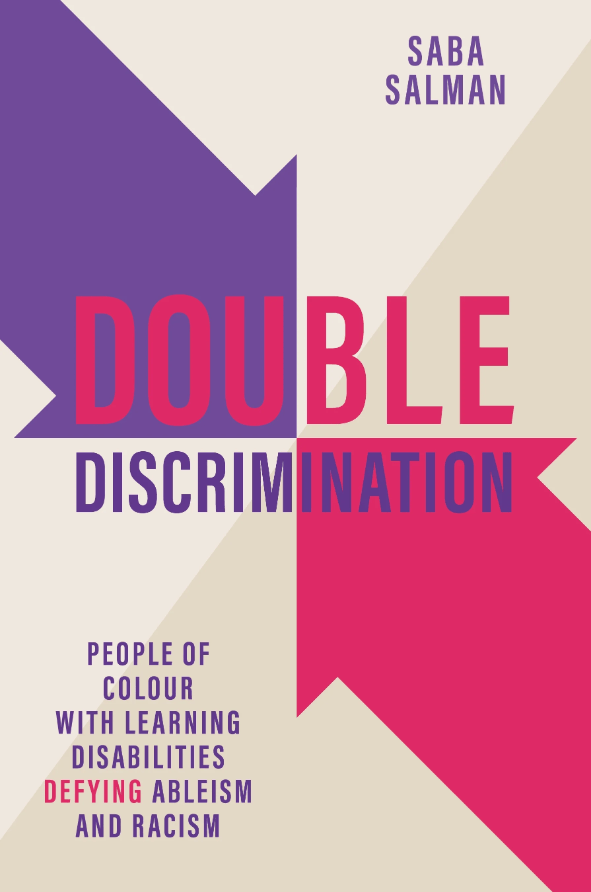
I’ve just finished Double Discrimination by Saba Salman, an examination of the intersection of racism and ableism, and frankly, it’s fantastic. There’s a very personal side to it: the author’s youngest sister is a woman of colour with a learning disability, so the book focuses heavily on ableism through the lens of learning disability. That isn’t something I’m a particular expert in. The points in the early chapters were ones I was already aware of, but it goes deeper once the intersectionality lens comes in.
Read more: Double Discrimination review: An important but not always easy readNarrative Structure
I loved how it combines quantitative statistical evidence with qualitative evidence: real stories from news cycles, academics and activists. One without the other is sort of empty and hollow. Most chapters relate back to her sister, at the start or the end, which is a really nice personal touch that keeps the book from becoming too detached and gives it a thread to follow.
Salman also talks to people from lots of different cultural and ethnic backgrounds, not just her own, which gives the book a lot more depth, meaning and authority. The final three chapters round it off really well: people already doing good work, why it’s working, and what we can do to continue it. One of them is the incredible Becca Cooper from here in York, which I was very excited to see.
The Vibes
This isn’t an easy read emotionally. One chapter, on how systemic and institutional racism often outweighs disability for children of colour, was especially hard. They struggle to get even a diagnosis, let alone support, because they’re assumed to be “difficult”. The stats were frankly horrifying.
It’s very well researched and very well written, but it’s not always easy reading, and understandably so. 4.5 stars.


Leave a Reply