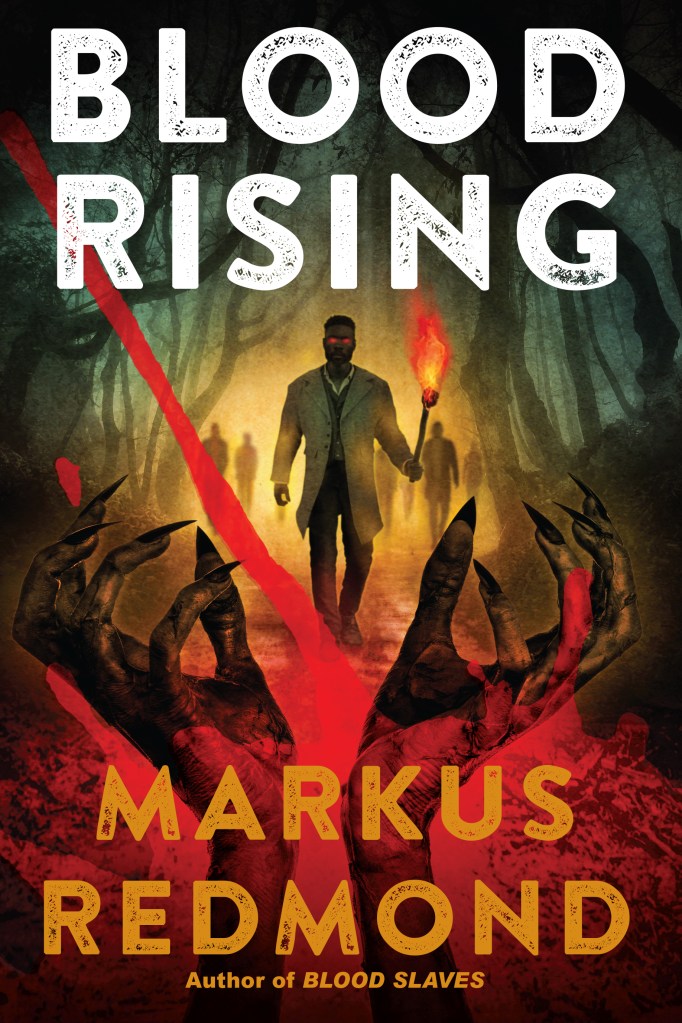
I went into Blood Rising by Markus Redmond having never read the first book in the series, Blood Slaves, half-expecting to spend the whole audiobook playing catch-up. Instead, the novel opens with an in-character summary of everything that came before, and from there I never once felt lost — though I suspect readers read the first book caught layers of lore I missed. What I got instead was a book brave enough to ask the question most stories skip: what happens after the revolt succeeds?
Read more: Blood Rising review: victory was the easy partWhat Worked
Redmond refuses to treat victory as the finish line. This is a story about the far messier work of rebuilding a society once you’ve torn part of it down, and the tension doesn’t stay neatly on one side of the conflict — allies strain against each other just as much as they push against former oppressors, and it feels devastatingly true to how revolutions actually play out. That backbone runs through a genuinely well-drawn ensemble: Gertie and Sarah’s friendship, a period-accurate spread of attitudes toward emancipation, and a reveal of the Free Black man’s identity that landed exactly right. I also didn’t clock until near the end that the narrative never once centers a scene on white characters — every moment stays anchored in the perspective of the freed people, and that consistency is a statement in itself.
The vampire mythology earns its place too, rather than sitting on top of the story for spectacle. The different forms the Ramanga take, shaped by how they feed, echo the book’s whole interest in what power looks like depending on how it’s sustained. Penelope’s arc — a racist white woman turned Ramanga, forced to confront her own mixed blood — could have resolved into something trite. Instead she oscillates between acceptance and hatred, and it reads as genuinely real. There’s also a quiet, subtle thread of gender and sexual identity woven through that never demands attention it doesn’t need, which is exactly the right call in a book already carrying this much.
Narration
The narrator does phenomenal work grounding the listener in this exact time period and the character’s place within it. He doesn’t differentiate voices between characters, which occasionally made group conversations tricky to follow — but I think it’s the right call regardless; the uniformity gives the whole thing a real solemnity.
Close
My one gripe is that the creation of the new America felt a little rushed in the closing stretch, though I half expected that to become its own future book. The ending leaves real threads dangling — Penelope, Rafazi, and Lily are all still out there — while still feeling complete if this is where the story ends.
Five stars, and I’d happily read more, if only to meet Gertie and Kwadzo’s baby daughter!
Read my full Goodreads review here!


Leave a Reply